Introduction
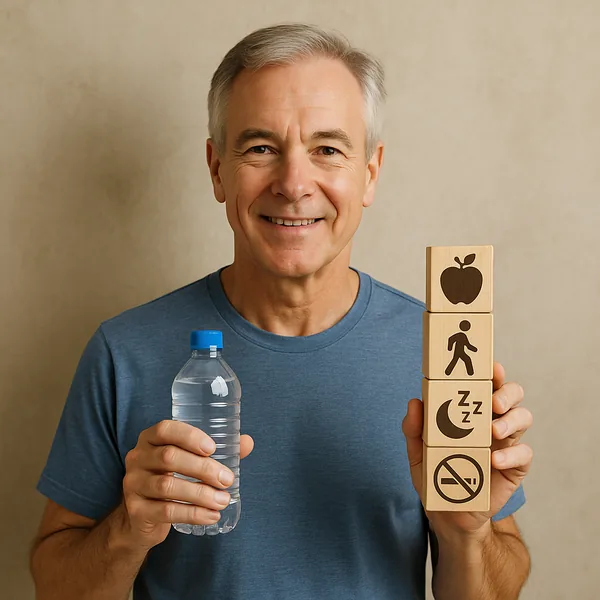
Most discussions about living longer focus on what to avoid: smoking, obesity, sedentary behaviour. But a growing body of evidence points equally at what to add. Four modifiable lifestyle habits, nutrition quality, sleep duration, physical activity, and the strength of social relationships, each independently predict how long a person is likely to live. None of them requires a prescription.
This article reviews the current scientific evidence for each, with specific numbers where they exist, and practical guidance drawn from that evidence.
This article is for general information only and does not replace consultation with a qualified healthcare professional.
Nutrition
Nutrition: the Mediterranean pattern leads the evidence
No single food extends life. The strongest and most consistent evidence favours overall dietary patterns rather than individual nutrients.
The most studied is the Mediterranean diet, characterised by high intake of vegetables, fruits, legumes, whole grains, nuts, olive oil, and fish, with low intake of red meat and processed foods. A 2024 study in JAMA Network Open, led by researchers from Harvard-affiliated Brigham and Women's Hospital, followed more than 25,000 women for up to 25 years. Those who closely followed the Mediterranean diet had up to 23% lower risk of all-cause mortality, with benefits for both cancer and cardiovascular death.
The biological mechanisms are increasingly understood. Mediterranean diet adherence reduces chronic low-grade inflammation (a process called inflammaging), improves insulin sensitivity, lowers low-density lipoprotein cholesterol, and favourably modifies the gut microbiome (the community of bacteria and other microorganisms living in the digestive tract). The PREDIMED randomised controlled trial, involving 7,447 high-risk participants, found a 30% reduction in major cardiovascular events with a Mediterranean diet supplemented by extra-virgin olive oil or nuts, compared with a low-fat control diet.
Evidence quality: High , multiple randomised trials and prospective cohort studies with millions of participants.
Practical guidance: - Prioritise vegetables, legumes, and whole grains at most meals - Use olive oil as the primary cooking and dressing fat - Eat fish two to three times per week - Reduce ultra-processed foods and red meat rather than eliminating any single food
Sleep
Sleep: the most underestimated longevity factor
Of all modifiable lifestyle factors, sleep may have the largest effect on life expectancy relative to public awareness. A 2025 study published in Sleep Advances, conducted by researchers at Oregon Health and Science University using Centers for Disease Control and Prevention survey data from 2019 to 2025, found that insufficient sleep (less than seven hours per night) had a more significant impact on decreased life expectancy than diet, physical activity, or social isolation. Only smoking had a stronger association.
Lead researcher Andrew McHill stated: "People really should strive to get seven to nine hours of sleep if at all possible."
Short sleep is associated with increased inflammatory markers, impaired glucose regulation, elevated cortisol, and reduced immune competence. Chronic sleep restriction also accelerates the biological aging process as measured by epigenetic clocks (molecular markers of cellular age derived from DNA chemical modifications).
Evidence quality: Moderate to High , strong observational data; causal mechanisms well-established in experimental studies.
Practical guidance: - Target seven to nine hours per night for adults; consistent timing matters as much as duration - Avoid screens in the hour before bed (blue light delays melatonin secretion) - Keep bedroom temperature cool (around 18°C) and dark - Alcohol disrupts the second half of sleep even if it helps with initial sleep onset
Physical Activity
Physical Activity: the most consistently studied factor
Physical activity is the most extensively studied longevity intervention in humans. The evidence is consistent across study designs, populations, and outcome measures.
A 2025 review and meta-analysis in eClinicalMedicine (The Lancet) examined sleep, physical activity, and nutrition as combined determinants of both lifespan and healthspan. Physical activity emerged alongside sleep and diet as a key independent predictor of disease-free life expectancy.
Specific findings from the broader literature: - 150 minutes per week of moderate-intensity aerobic activity (e.g. brisk walking, cycling) is the threshold at which mortality risk reduction is substantial - Resistance exercise two or more times per week counteracts sarcopenia, the age-related loss of muscle mass that increases fall risk, metabolic disease risk, and mortality - Even modest increases in activity from sedentary baseline produce the largest relative benefit. Going from no activity to 75 minutes of brisk walking per week reduces all-cause mortality risk by approximately 20%
Physical activity reduces inflammaging, maintains telomere length, improves mitochondrial function, and supports cardiovascular and cognitive health simultaneously.
Evidence quality: High , multiple randomised trials, cohort studies, and dose-response meta-analyses.
Practical guidance: - The goal is consistency, not intensity: daily walking is more effective for longevity than infrequent intense exercise - Include both aerobic exercise (walking, swimming, cycling) and resistance training (bodyweight, weights) - Avoid prolonged sitting: break sedentary periods every 30 to 60 minutes even if overall activity levels are met
Social Connection
Social Connection: the forgotten vital sign
Social relationships are among the strongest predictors of longevity, yet are rarely included in standard health assessments.
A meta-analysis by Holt-Lunstad and colleagues, covering more than 300,000 participants, found that people with strong social relationships had a 50% greater likelihood of survival compared to those with weaker social ties. The magnitude of this effect is comparable to quitting smoking or eliminating obesity. A separate meta-analysis covering more than 3 million participants found that social isolation is associated with a 29% increase in mortality risk, while loneliness is associated with a 26% increase.
The Harvard Study of Adult Development, an 80-year longitudinal study, concluded that social connection quality is a stronger predictor of long-term health and wellbeing than social class, genetics, or intelligence quotient.
Loneliness has been linked to a 50% greater risk of dementia, a 29% increased risk of heart disease, and a 32% increased risk of stroke.
The mechanisms include lower cortisol stress responses in socially connected individuals, better immune function, higher adherence to health behaviours (diet, exercise, medication), and reduced inflammatory signalling.
Evidence quality: High , consistent across multiple large meta-analyses and longitudinal cohort studies.
Practical guidance: - Prioritise relationship quality over quantity: a few close connections matter more than a large social network - Regular in-person contact is more beneficial than online-only interaction - Volunteering and community participation provide social benefits alongside sense of purpose - Social isolation is a modifiable risk factor: structured social activities, hobby groups, and community involvement are effective interventions
Comparing the Four Factors
| Factor | Mortality Risk Effect | Evidence Strength | Time to Benefit |
|---|---|---|---|
| Mediterranean diet adherence | Up to 23% reduction | High (RCTs + large cohorts) | Years |
| Sleep 7-9 hrs vs. less than 7 | Stronger than diet or exercise in one 2025 study | Moderate to High | Weeks to months |
| 150 min moderate activity per week | Up to 20-35% reduction | High (meta-analyses) | Months |
| Strong social relationships | 50% greater survival likelihood | High (300,000+ participant meta-analysis) | Long-term cumulative |
| Smoking cessation (for context) | 30-50% reduction | Highest (causal, RCTs) | Years |
FAQ
Do I need to follow all four habits to benefit?
No. Each factor independently reduces mortality risk, meaning any improvement in any one of them is beneficial. However, the effects are additive: people who sleep well, eat a Mediterranean-style diet, are physically active, and maintain close relationships accumulate the largest longevity benefit. A 2025 eClinicalMedicine study confirmed that the combination of sleep, physical activity, and nutrition (termed the SPAN model) produces greater life expectancy gains than any single factor alone.
Is genetics more important than lifestyle for longevity?
For most people, lifestyle factors contribute more to longevity than genetics, with estimates suggesting that genetics accounts for roughly 20 to 30% of lifespan variation in large population studies. The remaining 70 to 80% reflects environment, behaviour, and chance. Exceptional longevity in families (such as centenarians) has a stronger genetic component, but for the general population reaching a long and healthy life, modifiable behaviours dominate.
How does the concept of Blue Zones relate to these four factors?
Blue Zones are five regions in the world with unusually high concentrations of centenarians: Sardinia in Italy, Okinawa in Japan, Nicoya in Costa Rica, Ikaria in Greece, and Loma Linda in California. Researchers who studied these populations found that all five shared the same core lifestyle features: predominantly plant-based whole-food diets, regular low-intensity physical movement (walking, gardening), strong social and community bonds, and adequate rest. None of the Blue Zone populations took longevity supplements or followed extreme diets. Their longevity emerged from consistent, moderate, socially embedded lifestyle practices.
Summary
Longevity research consistently converges on four lifestyle pillars: a Mediterranean-style dietary pattern, seven to nine hours of sleep per night, regular physical activity (both aerobic and resistance), and strong social relationships. Each of these independently reduces all-cause mortality risk, and their benefits are cumulative. None requires expensive supplements, genetic advantage, or radical behaviour change. The evidence is now strong enough that these four factors should be considered as modifiable vital signs, as routinely assessed and acted upon as blood pressure or cholesterol.
References
- Ahmad S, Moorthy MV, Lee IM, et al. Mediterranean diet adherence and risk of all-cause mortality in women. JAMA Network Open. 2024. https://doi.org/10.1001/jamanetworkopen.2024.14360
- Harvard Gazette. Women who follow Mediterranean diet live longer. June 2024. https://news.harvard.edu/gazette/story/2024/06/women-who-follow-mediterranean-diet-live-longer/
- McAuliffe L, McHill AW, et al. Insufficient sleep and life expectancy. Sleep Advances. 2025. https://doi.org/10.1093/sleepadvances/zpaf008
- Stamatakis E, et al. Minimum combined sleep, physical activity, and nutrition variations associated with lifespan and healthspan improvements. eClinicalMedicine (The Lancet). 2025. https://doi.org/10.1016/j.eclinm.2025.103356
- Holt-Lunstad J, Smith TB, Layton JB. Social relationships and mortality risk: a meta-analytic review. PLOS Medicine. 2010. https://doi.org/10.1371/journal.pmed.1000316
- Furbatto M, Lelli D, Antonelli Incalzi R, Pedone C. Mediterranean diet in older adults. Nutrients. 2024;16(22):3947. https://doi.org/10.3390/nu16223947
- Loneliness, social isolation, and living alone: meta-analysis of mortality risks. PMC. 2025. https://pmc.ncbi.nlm.nih.gov/articles/PMC11750934/
- Brigham and Women's Hospital / Harvard Health. Mediterranean diet may help you live longer. September 2024. https://www.health.harvard.edu/healthy-aging-and-longevity/mediterranean-diet-may-help-you-live-longer
- Joshi S, Jabade M, Nadaf H, Salve P. Evidence-Based Pathways to Healthy Aging. Investigacion y Educacion en Enfermeria. 2025. https://www.ncbi.nlm.nih.gov/pmc/articles/PMC12674651/
- Waldinger RD. Harvard Study of Adult Development. Harvard Medical School. https://www.adultdevelopmentstudy.org/
Key Takeaways
- Four lifestyle habits independently predict longevity: nutrition quality, sleep duration, physical activity, and social connection strength
- A Mediterranean-style diet is associated with up to 23% lower all-cause mortality over 25 years (Harvard/Brigham Women's Hospital, JAMA Network Open 2024, 25,000+ women)
- Insufficient sleep (less than 7 hours/night) reduces life expectancy more than poor diet or physical inactivity, according to a 2025 OHSU study , only smoking had a stronger effect
- 150 minutes per week of moderate-intensity activity reduces mortality risk substantially; resistance training twice weekly counteracts sarcopenia
- People with strong social relationships have a 50% greater likelihood of survival vs. those with weak ties (meta-analysis, 300,000+ participants)
- Loneliness increases dementia risk by 50%, heart disease risk by 29%, and stroke risk by 32%
- Genetics accounts for approximately 20-30% of lifespan variation; lifestyle dominates for most people
- Blue Zones populations share four common features: plant-based diet, daily movement, strong social bonds, and adequate rest , no supplements or extreme diets
Medical Disclaimer
This article is for general information only and does not constitute medical advice, diagnosis, or treatment recommendations. It is not a substitute for consultation with a qualified healthcare professional. In a medical emergency, contact your local emergency services.


Be the first to comment!