Antioxidant Foods: Top Sources and Health Benefits
Discover top antioxidant foods, how they fight oxidative stress, and practical ways to add berries, cocoa, tea, nuts and greens to your diet.
Introduction
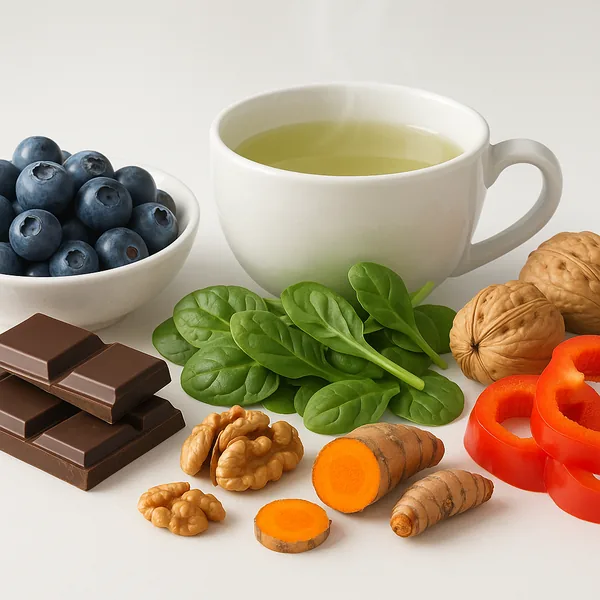
Antioxidant-rich foods are among the most researched dietary components in modern nutritional science, and for good reason. Every day, the human body produces unstable molecules called free radicals as a byproduct of normal metabolism, immune activity, and exposure to environmental stressors such as air pollution, UV radiation, and processed food chemicals. When free radicals accumulate faster than the body can neutralize them, oxidative stress results: a state linked to accelerated cellular aging, cardiovascular disease, neurodegenerative disorders, type 2 diabetes, and several cancers. Antioxidants, both those produced endogenously (superoxide dismutase, glutathione peroxidase, catalase) and those obtained through diet, serve as the primary defense against this damage.
A January 2026 review published in Antioxidants (MDPI) confirmed that dietary antioxidants, including polyphenols, vitamins, peptides, and specialized plant metabolites, maintain redox homeostasis and improve cellular adaptation to metabolic or inflammatory stress. Meanwhile, the 2020-2025 U.S. Dietary Guidelines and the Mayo Clinic (updated January 2025) continue to recommend plant-based foods as the superior source of dietary antioxidants over isolated supplements.
This article is for general informational purposes only and does not substitute for professional medical or nutritional advice. Always consult a registered dietitian or physician before making significant dietary changes.
Causes and Symptoms
What Causes Oxidative Stress?
Oxidative stress, the condition that antioxidant foods help counteract, arises from multiple sources
Endogenous (internal) causes
- Normal cellular respiration and mitochondrial activity
- Immune cell activation during infection or injury
- Enzymatic reactions producing hydrogen peroxide (H2O2) and superoxide anion
- Aging-related decline in endogenous antioxidant enzyme production
Exogenous (external) causes
- Cigarette smoke (introduces billions of free radicals per puff)
- Ultraviolet radiation from sunlight
- Air pollutants (particulate matter PM2.5, nitrogen dioxide, ozone)
- Excessive alcohol consumption
- Diets high in processed foods, trans fats, and refined sugars
- Certain medications (statins, methotrexate) at high doses
- Chronic psychological stress (elevates cortisol, promoting ROS production)
Signs the Body May Be Under Oxidative Stress
Unlike acute illness, oxidative stress does not produce immediate symptoms. Chronic oxidative damage manifests over years as: - Persistent fatigue not explained by sleep or activity level - Frequent infections (impaired immune response) - Accelerated skin aging (fine lines, loss of elasticity, hyperpigmentation) - Cognitive decline, memory lapses, and brain fog - Joint stiffness and inflammation resembling early arthritis - Elevated inflammatory markers (CRP, IL-6) on blood testing
These signs are non-specific; always seek medical evaluation rather than self-diagnosing oxidative stress from symptoms alone.
Top Antioxidant Foods Compared
The antioxidant capacity of foods is often measured by the Oxygen Radical Absorbance Capacity (ORAC) score (micromoles of Trolox equivalent per 100 g). Researchers caution that in vitro ORAC values do not perfectly predict in vivo efficacy. Below is a clinically informed comparison of the top antioxidant food categories.
| Feature | Blueberries | Dark Chocolate (>70% cocoa) | Green Tea | Spinach / Leafy Greens | Walnuts |
|---|---|---|---|---|---|
| ORAC score (per 100g) | ~9,600 umol TE | ~20,800 umol TE | ~1,253 umol TE (brewed) | ~1,515 umol TE | ~13,500 umol TE |
| Primary antioxidant | Anthocyanins | Flavanols (epicatechin, catechin) | EGCG | Lutein, zeaxanthin, vitamin C | Ellagic acid, gamma-tocopherol |
| Key organ benefit | Brain, cardiovascular | Cardiovascular, mood | Metabolic, anti-cancer | Eye health, bone density | Cardiovascular, brain |
| Evidence quality | High (multiple RCTs) | Moderate (RCTs + meta-analyses) | Moderate (large cohort studies) | Moderate (epidemiological) | Moderate (RCTs) |
| Bioavailability | High (absorbed in intestine) | Moderate (fat improves absorption) | Variable (food > supplements) | Enhanced by cooking or fat | High (ellagic acid) |
| Main limitation | Seasonal, costly | High calorie density, sugar | Caffeine, reduces iron absorption | Oxalate in raw form | High calorie density |
| Serving recommendation | 1/2 cup (75 g) daily | 20-30 g per day (1-2 squares) | 2-3 cups per day | 2-3 cups raw or 1 cup cooked | 30 g (about 7 walnuts) |
Antioxidant Vitamins: Direct Comparison
| Nutrient | Best Food Source | Daily Target (Adults) | Function |
|---|---|---|---|
| Vitamin C (ascorbic acid) | Red bell pepper (190 mg/100g), kiwi (93 mg/100g) | 75-90 mg | Neutralizes aqueous-phase ROS, regenerates vitamin E |
| Vitamin E (alpha-tocopherol) | Sunflower seeds (35 mg/100g), almonds (26 mg/100g) | 15 mg | Protects cell membranes from lipid peroxidation |
| Beta-carotene (pro-vitamin A) | Sweet potato (8.5 mg/100g), carrots (8.3 mg/100g) | 3-6 mg typical | Quenches singlet oxygen, converted to vitamin A |
| Selenium | Brazil nuts (1917 mcg/100g), tuna (90 mcg/100g) | 55 mcg | Cofactor for glutathione peroxidase |
| Lycopene | Cooked tomatoes (16 mg/100g), watermelon (4.5 mg/100g) | 8-21 mg suggested | Prostate and cardiovascular protection |
Diagnosis
How Antioxidant Status Is Assessed Clinically
There is no single standard clinical test for antioxidant status in healthy individuals. Assessment is typically research-based or conducted in the context of specific disease investigation.
Laboratory Markers of Oxidative Stress
- 8-OHdG (8-hydroxydeoxyguanosine): Urine or serum marker of DNA oxidation; elevated in chronic kidney disease, cancer, and type 2 diabetes.
- Malondialdehyde (MDA): Plasma marker of lipid peroxidation; elevated in cardiovascular disease and metabolic syndrome.
- F2-isoprostanes: Considered the most reliable in vivo marker of oxidative stress; measured in urine or plasma.
- Oxidized LDL (oxLDL): Serum test relevant to atherosclerosis risk assessment.
- Total antioxidant capacity (TAC): Research assay measuring combined antioxidant defense; not yet standard in clinical labs.
- Glutathione (reduced/oxidized ratio): Measured in specialized labs; reduced glutathione indicates compromised antioxidant defense.
Indirect Nutritional Assessment
- 24-hour dietary recall or food frequency questionnaire (FFQ) to estimate polyphenol and vitamin intake
- Serum vitamin C, vitamin E, beta-carotene, and selenium levels via standard blood panel
- CRP (C-reactive protein) and IL-6 as indirect inflammatory markers associated with oxidative stress
GRADE note: Direct clinical measurement of oxidative stress for routine health monitoring currently has Low to Insufficient evidence for widespread diagnostic use.
Treatment
How to Optimize Antioxidant Intake Through Diet
Evidence-based dietary strategies to increase antioxidant capacity (High-quality to Moderate evidence from multiple RCTs and large cohort studies):
The Mediterranean Diet Pattern
The Mediterranean dietary pattern, characterized by high intake of olive oil, vegetables, legumes, fish, and moderate red wine, is the most evidence-backed dietary approach for reducing oxidative stress. A 2024 Frontiers in Nutrition review highlighted the Dietary Antioxidant Index (DAI) and found that higher DAI scores, typical of Mediterranean-style eating, were associated with significantly lower risk of cardiovascular events, type 2 diabetes, and all-cause mortality.
Top Antioxidant Food Strategies (by category)
Berries (blueberries, strawberries, cranberries, raspberries): Strawberries consumed for 4 weeks significantly improved antioxidant status, endothelial function, and inflammation in adults with cardiometabolic risk, per research published in Nutrients (2022). Consuming 1/2 to 1 cup of mixed berries daily is a practical and evidence-supported target.
Dark chocolate (>70% cocoa): Flavanols in dark chocolate, specifically epicatechin and catechin, enhance nitric oxide bioavailability and reduce blood pressure. Multiple meta-analyses (2023) confirm 20-30 g per day of dark chocolate with >70% cocoa is associated with reduced LDL oxidation and improved vascular function (Moderate evidence).
Green tea (Camellia sinensis): Epigallocatechin gallate (EGCG), the dominant polyphenol in green tea, inhibits NF-kB and activates Nrf2 signaling, reducing inflammation and oxidative damage at the cellular level. 2-3 cups per day is associated with reduced risk of gastric and colorectal cancer in large Asian cohort studies (Moderate evidence).
Cruciferous vegetables (broccoli, Brussels sprouts, cauliflower): Sulforaphane, derived from glucoraphanin in cruciferous vegetables, is a potent Nrf2 activator, upregulating the body's own antioxidant enzyme systems (superoxide dismutase, catalase, glutathione S-transferase). Moderate evidence from RCTs supports protective effects against lung and colorectal cancer.
Spices (turmeric, cinnamon, cloves): Curcumin (turmeric) modulates the PI3K/Akt signaling pathway, reducing apoptosis and endothelial dysfunction (Antioxidants, MDPI 2026). However, curcumin bioavailability is poor unless combined with piperine (black pepper extract), which increases absorption by up to 2,000%.
Olive oil (extra virgin): Extra virgin olive oil (EVOO) contains oleocanthal (anti-inflammatory), oleuropein, and hydroxytyrosol. Daily consumption of 20-40 mL EVOO is a cornerstone of Mediterranean diet benefits.
Supplements vs. Food Sources
Research consistently shows that isolated antioxidant supplements do not replicate the benefits of whole food sources. High-dose supplementation with vitamin E and beta-carotene has in some studies been associated with increased cancer risk (SELECT trial for vitamin E; CARET trial for beta-carotene in smokers). The synergistic matrix of whole foods, including fiber, cofactors, and bioactive compounds working together, appears essential for antioxidant efficacy (High-quality evidence from multiple large RCTs).
Multisystem Impact
Oxidative stress and antioxidant defense influence nearly every organ system. A high-antioxidant diet has documented benefits across multiple body systems:
Cardiovascular System
Polyphenols and vitamin E reduce LDL oxidation, a critical step in the formation of arterial plaques (atherosclerosis). Anthocyanins from berries improve endothelial function by increasing nitric oxide production. Epidemiological data shows that individuals with the highest flavonoid intake have a 20-25% lower risk of cardiovascular disease compared to those with the lowest intake (Moderate evidence, large cohort studies).
Neurology and Cognitive Function
Blueberry anthocyanins cross the blood-brain barrier and have been shown in RCTs to improve memory performance in older adults with mild cognitive impairment (MCI). The MIND diet (Mediterranean-DASH Intervention for Neurodegenerative Delay), which emphasizes leafy greens, berries, nuts, olive oil, and fish, is associated with a 35% reduction in Alzheimer's disease risk in adherent individuals (Moderate evidence).
Metabolic and Endocrine System
A 2024 Korean cohort study of over 60,000 individuals found that antioxidant vitamin intake (B1, B2, B3, C, A) was significantly lower in subjects with metabolic syndrome. Antioxidants improve insulin sensitivity by reducing oxidative damage to pancreatic beta cells.
Skin and Aging
Topical vitamin C applied with broad-spectrum sunscreen provides synergistic UV protection. Dietary lycopene from cooked tomatoes and watermelon has been shown in multiple studies to provide measurable photoprotection and reduce UV-induced skin damage. Dietary antioxidants are associated with longer telomere length, a cellular marker of biological aging (Low to Moderate evidence).
Eye Health
Lutein and zeaxanthin, found in high concentrations in spinach, kale, and egg yolks, accumulate in the macula of the eye and protect against age-related macular degeneration (AMD). The AREDS2 trial confirmed that supplementation with lutein/zeaxanthin reduced the risk of advanced AMD by approximately 25% (High-quality evidence from RCT).
Warning Signs
Warning Signs That May Indicate Severe Antioxidant Deficiency
While mild antioxidant insufficiency is common and largely asymptomatic, severe deficiency in specific antioxidant vitamins produces recognizable clinical syndromes:
Vitamin C deficiency (Scurvy)
- Pinpoint skin hemorrhages (petechiae)
- Bleeding and swollen gums
- Poor wound healing, reopening of healed wounds
- Extreme fatigue and joint pain
Vitamin E deficiency (rare, mainly in fat malabsorption conditions)
- Peripheral neuropathy (numbness, tingling in hands and feet)
- Muscle weakness and coordination problems (ataxia)
- Visual disturbances (retinopathy in severe cases)
Selenium deficiency (Keshan disease)
- Dilated cardiomyopathy (enlarged, weakened heart)
- Skeletal muscle weakness
- Thyroid dysfunction
General Red Flags Requiring Immediate Medical Evaluation
- Unexplained significant weight loss combined with fatigue
- Persistent bruising or skin hemorrhages
- Yellowing of skin or eyes (jaundice, may indicate liver disease)
- Neurological symptoms: loss of coordination, severe memory loss, vision changes
- Chest pain or palpitations in the context of known cardiovascular risk
When to See a Doctor
Consult a primary care physician or registered dietitian if you experience
- Persistent fatigue that does not improve with rest
- Symptoms of vitamin deficiency (gum bleeding, unexplained bruising, peripheral neuropathy)
- You have a diagnosis of cardiovascular disease, type 2 diabetes, or a neurodegenerative condition
- You are pregnant or breastfeeding and want guidance on safe antioxidant intake
- You are considering high-dose antioxidant supplementation (vitamins A, E, or selenium)
- You have a family history of AMD, hereditary cancer syndromes, or metabolic syndrome
Seek emergency care immediately if you experience
- Chest pain, sudden shortness of breath, or signs of stroke (facial drooping, arm weakness, slurred speech)
- Severe allergic reaction to any new food (anaphylaxis: throat swelling, difficulty breathing, rapid heartbeat)
- Sudden or significant vision loss
Practical Tips
Evidence-Based Daily Strategies for Maximizing Antioxidant Intake
- Eat the rainbow: Different pigments correspond to different antioxidant classes. Red (lycopene), orange (beta-carotene), purple/blue (anthocyanins), green (lutein, sulforaphane), yellow (zeaxanthin, quercetin). Aim for at least 5 colors per day.
- Cook tomatoes: Lycopene bioavailability increases dramatically with cooking. Tomato sauce provides 3 to 5 times more bioavailable lycopene than raw tomatoes.
- Pair fat with fat-soluble antioxidants: Vitamins A, E, K, and carotenoids require dietary fat for absorption. Add olive oil or avocado to salads and cooked vegetables.
- Don't peel unnecessarily: Many antioxidants concentrate in or just beneath the skin of fruits and vegetables (apples, grapes, potatoes, cucumbers).
- Choose dark chocolate over milk chocolate: Dark chocolate (>70% cocoa) contains significantly higher flavanol concentrations than milk chocolate.
- Add herbs and spices generously: Cloves, oregano, rosemary, thyme, and turmeric are gram-for-gram among the most antioxidant-dense foods available.
- Brew green tea correctly: Steep at 70-80 degrees C for 2-3 minutes. Excessive heat destroys EGCG.
- Minimize ultra-processed food: These foods introduce prooxidants such as trans fats, advanced glycation end products (AGEs), and acrylamide while providing minimal antioxidants.
- Store produce properly: Refrigerate berries and leafy greens promptly. Frozen produce retains antioxidant levels well due to rapid post-harvest processing.
- Diversify your nut intake: Walnuts lead in polyphenol content among common nuts, followed by pecans and chestnuts. Rotate varieties for a broader spectrum of protective compounds.
FAQ
What are the top 5 most antioxidant-rich foods?
Based on combined ORAC scores, clinical research, and bioavailability, the top 5 are: (1) wild blueberries (approximately 9,600 umol TE per 100g), which deliver anthocyanins proven in RCTs to improve cognitive function and cardiovascular markers; (2) dark chocolate with more than 70% cocoa (approximately 20,800 umol TE per 100g), with flavanols linked to reduced LDL oxidation; (3) walnuts (approximately 13,500 umol TE per 100g), rich in ellagic acid and gamma-tocopherol; (4) cloves and cinnamon (among the highest ORAC scores of any food, exceeding 300,000 umol TE per 100g dry weight), used in gram quantities as culinary spices; (5) green tea leaves, providing EGCG associated with reduced cancer and cardiovascular risk in large cohort studies.
Are antioxidant supplements as effective as food?
No. Multiple large randomized controlled trials demonstrate that isolated antioxidant supplements do not replicate the benefits of dietary antioxidants from whole foods. The SELECT trial (35,000+ men) found that vitamin E supplementation (400 IU/day) did not reduce prostate cancer risk and may have increased it. The CARET trial showed that beta-carotene supplements increased lung cancer risk in smokers by 28%. Whole foods provide synergistic combinations of antioxidants, fiber, and cofactors that supplements cannot replicate. Always prioritize dietary sources first.
How much blueberry should I eat to get antioxidant benefits?
Most clinical trials demonstrating cognitive and cardiovascular benefit used portions of 100-150 grams per day (approximately 3/4 to 1 cup). A 2023 meta-analysis confirmed that daily blueberry consumption in this range significantly improved memory performance in healthy older adults over 12 weeks. Both fresh and frozen blueberries are effective. Wild blueberries have approximately double the antioxidant capacity of cultivated varieties.
Does cooking destroy antioxidants?
It depends on the antioxidant and cooking method. Vitamin C is heat-sensitive: boiling vegetables can reduce vitamin C content by 50-80%. However, cooking increases lycopene bioavailability in tomatoes, and light steaming is optimal for broccoli sulforaphane. Steaming and microwaving preserve more antioxidants than boiling.
Can eating antioxidant foods prevent cancer?
Antioxidant-rich diets are associated with reduced cancer risk in epidemiological studies, but the relationship is not causative in isolation. The World Cancer Research Fund (WCRF) 2023 systematic review confirms that diets high in non-starchy vegetables, fruits, and whole grains are associated with lower risk of colorectal, stomach, and breast cancers. However, no single food prevents cancer, and lifestyle factors including non-smoking, physical activity, and healthy body weight are of greater magnitude of effect.
What is the best antioxidant for heart health?
For cardiovascular health specifically, the strongest evidence supports: flavanols from dark chocolate and cocoa (reduce LDL oxidation, improve endothelial function, lower blood pressure in Moderate-evidence RCTs); resveratrol from red grapes (activates SIRT1 and promotes mitochondrial biogenesis); and extra virgin olive oil polyphenols (hydroxytyrosol, oleuropein). The overall dietary pattern matters more than any single compound.
Summary
Antioxidant foods represent one of the most compelling and evidence-supported areas of nutritional science. Free radical damage, accumulating over decades, contributes to the most prevalent chronic diseases of the 21st century: cardiovascular disease, type 2 diabetes, neurodegeneration, and cancer. Dietary antioxidants, obtained through a diverse, plant-rich diet, provide the primary external defense against this damage. The evidence consistently shows that the best approach is not supplementation with isolated nutrients but rather consistent, daily consumption of a variety of antioxidant-dense foods: berries, dark leafy greens, nuts, dark chocolate, green tea, extra-virgin olive oil, cruciferous vegetables, and colorful spices.
The next step is practical: audit your current diet for antioxidant diversity, not just quantity. Aim to include at least 5 differently colored plant foods per day, rotate your nut and seed choices, and use herbs and spices generously. If you have a chronic disease or elevated cardiovascular, metabolic, or neurodegenerative risk, consult a registered dietitian who can tailor an antioxidant-optimized dietary pattern to your individual needs.
References
- Dini I. Potential Health Benefits of Dietary Antioxidants. Antioxidants (Basel). 2026;15(1):92. doi:10.3390/antiox15010092. https://pmc.ncbi.nlm.nih.gov/articles/PMC12838140/
- Ramos-Romero S, et al. Antioxidant Foods and Cardiometabolic Health. Nutrients. 2022. https://www.ncbi.nlm.nih.gov/pmc/articles/PMC9028176/
- Role of Antioxidant Foods and Nutraceuticals in Ageing. Nutrients Special Issue. 2024. https://www.ncbi.nlm.nih.gov/pmc/articles/PMC11274047/
- Dietary Antioxidant Index and disease risk. Frontiers in Nutrition. 2025;11. doi:10.3389/fnut.2024.1497364. https://www.frontiersin.org/journals/nutrition/articles/10.3389/fnut.2024.1497364/full
- Mayo Clinic. Add antioxidants to your diet. Updated January 25, 2025. https://www.mayoclinic.org/healthy-lifestyle/nutrition-and-healthy-eating/in-depth/add-antioxidants-to-your-diet/art-20546814
- WebMD. Health Benefits of Antioxidants. Reviewed April 20, 2025. https://www.webmd.com/diet/health-benefits-antioxidants
- Healthline. 14 Healthy Foods High in Antioxidants. Updated January 23, 2026. https://www.healthline.com/nutrition/foods-high-in-antioxidants
- U.S. Department of Agriculture/HHS. 2020-2025 Dietary Guidelines for Americans. https://www.dietaryguidelines.gov
- Klein EA, et al. Vitamin E and prostate cancer: the SELECT trial. JAMA. 2011;306(14):1549-1556. https://pubmed.ncbi.nlm.nih.gov/21990298/
- Omenn GS, et al. CARET trial: beta-carotene and lung cancer. N Engl J Med. 1996;334(18):1150-1155. https://pubmed.ncbi.nlm.nih.gov/8602180/
- AREDS2 Research Group. Lutein + zeaxanthin for age-related macular degeneration. JAMA. 2013;309(19):2005-2015. https://pubmed.ncbi.nlm.nih.gov/23644932/
- World Cancer Research Fund. Diet, Nutrition, Physical Activity and Cancer: Continuous Update Project 2023. https://www.wcrf.org/diet-activity-and-cancer/
Key Takeaways
- Oxidative stress, caused by an imbalance between free radicals and antioxidants, is a root driver of cardiovascular disease, neurodegeneration, type 2 diabetes, and cancer.
- Plant-based foods, including berries, dark leafy greens, nuts, dark chocolate, green tea, and olive oil, are the most effective sources of dietary antioxidants.
- Dark chocolate (>70% cocoa) scores approximately 20,800 umol TE per 100g ORAC, with evidence-backed cardiovascular benefits.
- Whole food sources consistently outperform isolated supplements; high-dose supplements (vitamin E, beta-carotene) have shown harm in specific populations in large RCTs.
- Cooking increases bioavailability of lycopene in tomatoes but can reduce vitamin C; steaming preserves more antioxidants than boiling.
- The Mediterranean diet remains the best-evidenced overall dietary pattern for reducing oxidative stress and chronic disease risk.
- Curcumin (turmeric) requires piperine (black pepper) co-administration to achieve meaningful bioavailability in humans.
- Lutein and zeaxanthin from spinach and kale protect against age-related macular degeneration, confirmed by the AREDS2 RCT.
- Dietary antioxidants improve insulin sensitivity and protect pancreatic beta cells, reducing metabolic syndrome risk in large cohort studies.
- A diverse, colorful, plant-rich diet with at least 5 differently colored vegetables and fruits per day provides the broadest antioxidant protection.
Medical Disclaimer
This article is intended for general informational and educational purposes only. It is not a substitute for professional medical advice, diagnosis, or treatment. The information presented here reflects current scientific research as of 2026 and may change as new evidence emerges. Always consult a qualified healthcare provider, registered dietitian, or physician before making significant dietary changes, starting antioxidant supplementation, or if you have symptoms that concern you. If you are experiencing a medical emergency, call emergency services immediately: 101 (Israel), 911 (United States), 112 (European Union).
References
- Dini I. Potential Health Benefits of Dietary Antioxidants. Antioxidants (Basel). 2026;15(1):92. doi:10.3390/antiox15010092. https://pmc.ncbi.nlm.nih.gov/articles/PMC12838140/
- Ramos-Romero S, et al. Antioxidant Foods and Cardiometabolic Health. Nutrients. 2022. https://www.ncbi.nlm.nih.gov/pmc/articles/PMC9028176/
- Role of Antioxidant Foods and Nutraceuticals in Ageing. Nutrients Special Issue. 2024. https://www.ncbi.nlm.nih.gov/pmc/articles/PMC11274047/
- Dietary Antioxidant Index and disease risk. Frontiers in Nutrition. 2025;11. doi:10.3389/fnut.2024.1497364. https://www.frontiersin.org/journals/nutrition/articles/10.3389/fnut.2024.1497364/full
- Mayo Clinic. Add antioxidants to your diet. Updated January 25, 2025. https://www.mayoclinic.org/healthy-lifestyle/nutrition-and-healthy-eating/in-depth/add-antioxidants-to-your-diet/art-20546814
- WebMD. Health Benefits of Antioxidants. Reviewed April 20, 2025. https://www.webmd.com/diet/health-benefits-antioxidants
- Healthline. 14 Healthy Foods High in Antioxidants. Updated January 23, 2026. https://www.healthline.com/nutrition/foods-high-in-antioxidants
- U.S. Department of Agriculture/HHS. 2020-2025 Dietary Guidelines for Americans. https://www.dietaryguidelines.gov
- Klein EA, et al. Vitamin E and prostate cancer: the SELECT trial. JAMA. 2011;306(14):1549-1556. https://pubmed.ncbi.nlm.nih.gov/21990298/
- Omenn GS, et al. CARET trial: beta-carotene and lung cancer. N Engl J Med. 1996;334(18):1150-1155. https://pubmed.ncbi.nlm.nih.gov/8602180/
- AREDS2 Research Group. Lutein + zeaxanthin for age-related macular degeneration. JAMA. 2013;309(19):2005-2015. https://pubmed.ncbi.nlm.nih.gov/23644932/
- World Cancer Research Fund. Diet, Nutrition, Physical Activity and Cancer: Continuous Update Project 2023. https://www.wcrf.org/diet-activity-and-cancer/
Be the first to comment!