Introduction
Measles is a highly contagious viral disease that has been re-emerging in recent years as vaccination rates fall. The virus spreads through the air very easily, and the most effective way to prevent measles is a two-dose vaccine.
The illness starts with a high fever, cough, runny nose, and conjunctivitis (red, watery eyes), and only after a few days does the characteristic rash appear. In most healthy children measles resolves, but in some it can cause dangerous complications such as pneumonia or brain inflammation.
This article explains what measles is, its symptoms and what the rash looks like, how contagious it is, the complications, and how the MMR vaccine protects children and adults. The information is general and does not replace examination by a doctor.
What Is Measles
Measles is caused by the measles virus, one of the most contagious agents known to medicine. The virus travels through the air in tiny droplets from coughing, sneezing, and even talking, and can linger in the air for up to 2 hours after an infected person has left the room.
One infected person infects, on average, 12 to 18 unvaccinated people, and about 90 percent of unvaccinated people exposed to the virus will become ill. Because transmission is so high, even a small drop in vaccination coverage is enough to allow an outbreak.
Measles Symptoms and Stages
From infection to the first symptoms, usually 7 to 14 days pass. The illness develops in clear stages.
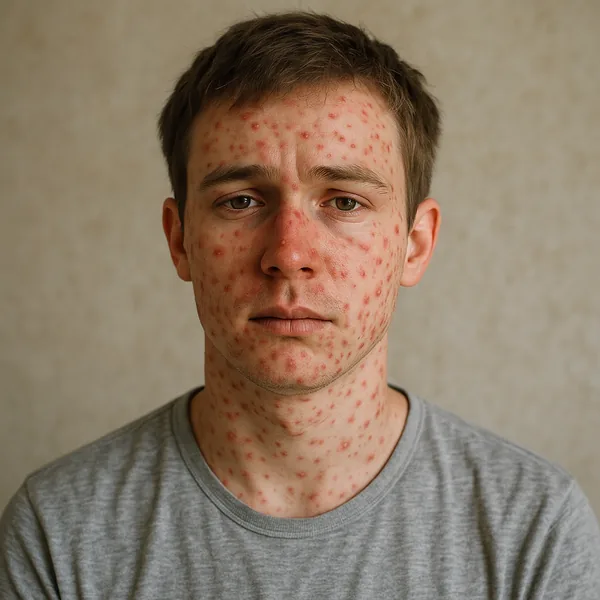
Early stage (2 to 4 days): a high fever that can rise above 40°C (104°F), a dry cough, a runny nose, and conjunctivitis, which shows as red, watery eyes and sensitivity to light. Koplik spots: tiny whitish dots inside the mouth, opposite the molars, that appear 1 to 2 days before the rash and are unique to measles. Rash stage: about 3 to 5 days after symptoms begin, the rash appears. This is what a measles rash looks like: red spots and small bumps that start at the hairline and face and spread downward to the neck, body, arms, and legs. As the rash appears, the fever tends to spike again.
The rash lasts about 5 to 6 days and then fades in the same order it appeared. A child with measles looks and feels very ill, unlike mild rash illnesses where the child keeps playing as usual.
Measles Versus Other Rash Illnesses
It is easy to confuse measles with other viral rash illnesses. The table summarizes the main differences that help tell them apart.
| Feature | Measles | Chickenpox | Rubella |
|---|---|---|---|
| Rash type | red spots and bumps that merge | itchy blisters | fine pink spots |
| Spread direction | face downward | from the trunk outward | face downward |
| Fever | very high | mild to moderate | mild or none |
| Unique sign | Koplik spots in the mouth | blisters at different stages | swollen glands at the back of the neck |
| Vaccine | MMR | chickenpox vaccine | MMR |
In any case of doubt, a definitive diagnosis is made by a doctor and a laboratory test, not by comparing pictures alone.
How Contagious Is Measles
Measles is contagious from 4 days before the rash appears until 4 days after, so a patient can spread it before the illness is even recognized. This is one reason the virus spreads so fast in areas with low vaccine coverage.
A person who is ill or exposed should stay isolated at home and avoid contact with unvaccinated people, infants, pregnant women, and people with a weakened immune system. It is important to call the clinic in advance before arriving, to avoid infecting others in the waiting room.
How Measles Is Diagnosed
During an outbreak a doctor can suspect measles from the typical symptoms, especially the combination of high fever, cough, conjunctivitis, and Koplik spots. To confirm the diagnosis, a blood test for IgM antibodies is taken, and sometimes a PCR test from a throat or urine sample.
Measles is a notifiable disease that must be reported to the health authorities. A confirmed diagnosis makes it possible to trace contacts and vaccinate or isolate them quickly to stop a chain of transmission.
Possible Complications
In most healthy children measles resolves within about two weeks, but it is not a harmless illness. Complications are more common in children under 5, adults over 20, pregnant women, and people with a weakened immune system.
Possible complications
- Ear infection, in about 1 in 10 ill children, which can harm hearing.
- Diarrhea and dehydration.
- Pneumonia, the most common cause of death from measles, in about 1 in 20 ill children.
- Brain inflammation, in about 1 in 1,000 cases, which can cause permanent brain damage.
- Very rarely, a late degenerative brain disease years after recovery.
Among unvaccinated children, about 1 in 5 is hospitalized, and 1 to 3 in every 1,000 ill people may die from the disease. These figures show why prevention through vaccination matters so much.
Treatment for Measles
There is no specific antiviral drug for measles, and treatment is supportive, aimed at easing symptoms and preventing complications. The main points of care: • Rest and plenty of fluids to prevent dehydration. • Lowering fever with a medicine matched to age and weight, on a doctor's or pharmacist's advice. • Watching for warning signs and seeing a doctor when needed.
The World Health Organization recommends giving a vitamin A supplement to children with measles, as it has been shown to reduce the risk of complications and death. Vitamin A is given on medical advice only. Antibiotics do not act against the virus itself and are reserved only for an added bacterial infection, such as an ear infection or pneumonia.
Measles Vaccine
Vaccination is the most effective protection against measles. The MMR vaccine protects against measles, mumps, and rubella, and a four-component version (MMRV) also covers chickenpox. It is given in two doses: • A first dose at about 12 months of age. • A second dose at about 4 to 6 years of age.
Two doses provide about 97 percent protection against the disease, and one dose about 93 percent. Protection usually lasts a lifetime.
Measles vaccine in adults: adults who did not receive two vaccine doses and do not recall having measles should complete vaccination, especially during an outbreak, before international travel, and for healthcare workers. A person who had measles in the past is usually considered immune.
Someone exposed to a patient who is not vaccinated can receive a vaccine dose within 72 hours of exposure, or antibodies (immunoglobulin) within 6 days, to prevent the disease or ease its course.
When to See a Doctor
With any suspicion of measles, it is important to call the clinic by phone before arriving, to avoid infecting others. See a doctor urgently or go to the emergency department if any of these appear: • Difficulty breathing or rapid breathing. • A very high fever that does not improve, or a fever that returns after it had dropped. • Unusual drowsiness, confusion, a stiff neck, or a seizure. • Signs of dehydration: dry mouth, little urine, and marked weakness. • Severe ear pain, or eye pain and strong sensitivity to light. • Measles in an infant, a pregnant woman, or a person with a weakened immune system.
Seeking help early allows monitoring and timely detection of complications. In an emergency, call your local emergency number.
Practical Tips for Prevention
Alongside the vaccine, a few steps help protect the family and reduce transmission, especially during an active outbreak. • Make sure all family members have received two vaccine doses; you can check the vaccination record. • During an outbreak, an infant may receive an earlier vaccine dose on medical guidance. • Avoid taking unvaccinated infants to crowded places in outbreak areas. • Anyone returning from abroad with fever and rash should call for advice before arriving at a clinic. • A nurse advice line or your doctor can help with questions and catch-up vaccination.
Watch for warning signs in anyone who is ill, and seek care promptly if breathing, alertness, or hydration worsen.
FAQ
What is measles?
Measles is a highly contagious viral disease that mainly affects the airways and skin. It starts with a high fever, cough, runny nose, and conjunctivitis, and after a few days a characteristic rash appears. It can cause complications, which is why vaccination is important.
What are the first symptoms of measles?
The first symptoms, before the rash, are a high fever, dry cough, runny nose, and conjunctivitis. One to two days before the rash, Koplik spots, tiny whitish dots inside the mouth, may appear and are typical of measles.
What does a measles rash look like?
The rash is red spots and small bumps that start at the hairline and face and spread downward to the rest of the body. The spots tend to merge, and the rash appears about 3 to 5 days after symptoms begin and lasts about 5 to 6 days.
How long is measles contagious?
A person with measles is contagious from 4 days before the rash appears until 4 days after. During this time it is important to stay isolated and avoid contact with unvaccinated people, infants, and pregnant women.
Do adults need a measles vaccine?
Adults who did not receive two vaccine doses and do not recall having measles should complete vaccination, especially during an outbreak, before international travel, and for healthcare workers. A person who had measles in the past is usually considered immune.
Can you get measles despite being vaccinated?
Two vaccine doses protect about 97 percent, so a small minority of vaccinated people may still fall ill, usually with a milder course. The protection far outweighs the risk, and broad vaccine coverage also protects those who cannot be vaccinated.
Summary
Measles is a highly contagious re-emerging viral disease, with a high fever, cough, runny nose, and conjunctivitis followed by a red rash that spreads from the face downward. In most children it passes, but it can cause dangerous complications, including pneumonia and brain inflammation, especially in risk groups.
The most effective protection is a two-dose vaccine, given in childhood and recommended for unvaccinated adults as well. With any suspicion of measles, it is best to call a doctor by phone before arriving at a clinic, and to seek urgent care with any warning signs.
References
- CDC. Measles Symptoms and Complications. Source: www.cdc.gov
- CDC. Measles Vaccine Recommendations. Source: www.cdc.gov
- CDC. Measles Clinical Diagnosis Fact Sheet. Source: www.cdc.gov
- World Health Organization. Measles fact sheet. Source: www.who.int
- Merck Manual Consumer Version. Measles. Source: www.merckmanuals.com
- MedlinePlus. Measles. Source: medlineplus.gov
- Cleveland Clinic. Measles. Source: my.clevelandclinic.org
- American Academy of Pediatrics. Measles FAQ. Source: www.aap.org
- Huiming Y, et al. Effectiveness of measles vaccination and vitamin A treatment. Source: pmc.ncbi.nlm.nih.gov

Be the first to comment!