Introduction
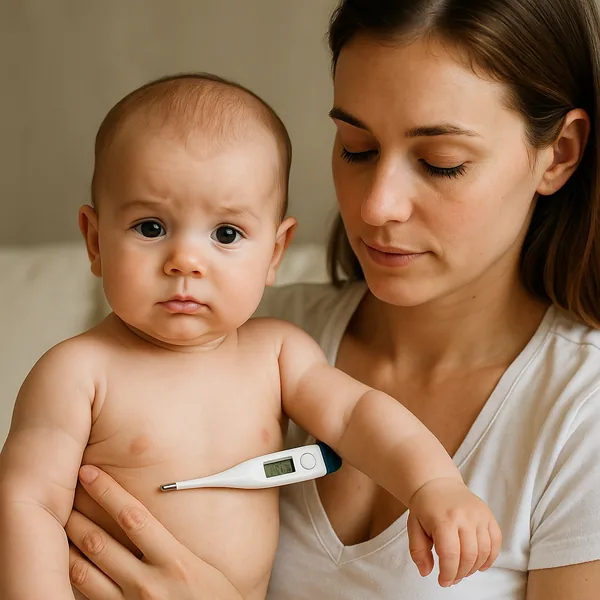
Measuring axillary (armpit) temperature is one of the simplest and safest ways to check whether a baby or child has a fever. To measure it correctly, place a digital thermometer deep in the fold of the armpit, hold the child's arm against the body so the thermometer stays in place, and wait for the beep or about 5 minutes.
The method suits any age, is non-invasive, and is comfortable even for infants. Keep in mind that an axillary reading tends to be slightly lower than the true core temperature, so it helps to know how much to add and how to read the result.
This article explains how to measure a child's axillary temperature step by step, what counts as a fever, when another method is better, and when to see a doctor. The information is general and does not replace examination by a doctor.
When to Choose the Axillary Method
The axillary method is a good fit when you want a quick, safe, non-invasive check. It is especially convenient for babies and toddlers who struggle with other methods.
Situations where the armpit is a good choice: • A quick first check to see whether a fever is present at all. • Infants and toddlers for whom a rectal reading is not possible or not comfortable. • Settings such as childcare, where invasive measurement is not allowed and only the armpit or forehead may be used.
In newborns, an axillary reading is almost as accurate as a rectal one, so it is a legitimate method even in the first days of life. When full certainty about the height of the fever is needed, for example in a very young infant, the doctor may prefer the most accurate method.
How to Measure Axillary Temperature Step by Step
Measuring an axillary temperature is simple, but a few small details affect how accurate the result is. Follow these steps.
- Clean the digital thermometer with soap and water or with an alcohol wipe, and let it dry.
- Make sure the armpit is dry, since moisture can lower the reading.
- Place the tip of the thermometer deep in the fold of the armpit so it touches skin on all sides.
- Hold the child's arm against the body and keep it there for the whole measurement.
- Turn the thermometer on and wait for the beep. If it does not beep, wait about 4 to 5 minutes.
- Read the result, note it with the time, and clean the thermometer again afterwards.
Use only a digital thermometer made for axillary use, and never a mercury thermometer. Movement, crying, or an arm that is not held close can reduce accuracy, so it is best to measure when the child is calm.
How Accurate Is It and How Much to Add
An axillary reading is reliable for a first check, but it tends to read slightly lower than the core temperature. The average gap is about 0.5°C (around 1°F) compared with a rectal reading.
Rules of thumb for reading the result: • After 2 months of age, it is common to add about 0.5°C to the axillary result to estimate the core temperature. • In newborns in the first days, the reading is very close to the core temperature, and usually no addition is needed. • Whenever in doubt, or when the result is borderline, confirm with a more accurate method.
Remember that the axillary reading is mainly meant to detect whether a fever exists. When an exact value is needed for a treatment or referral decision, the rectal method is the most accurate in infants.
What Counts as a Fever? Methods Table
The definition of fever depends on the measurement method, because each method measures a different part of the body. Fever is usually defined as 38°C (100.4°F) or higher by rectal measurement, and the axillary value is about 0.5°C lower.
| Method | Site | Accuracy | Best suited for |
|---|---|---|---|
| Rectal | rectum | highest in infants | young infants when certainty is needed |
| Axillary | armpit fold | good for a first check | any age, childcare, everyday use |
| Tympanic | ear canal | good from 6 months | older children |
| Forehead | temporal artery | convenient, slightly less accurate | quick check at any age |
A normal body temperature is usually around 36 to 37°C, and it varies a little through the day. A single slightly high reading is not necessarily a fever, so it helps to measure again and watch the child's feel and other symptoms.
Other Measurement Methods and When to Prefer Them
Alongside the armpit, other methods exist, each with pros and cons. The choice depends on the child's age, the accuracy needed, and convenience.
- Rectal measurement: the most accurate in infants, recommended when certainty about the height of the fever is needed. It is done gently and only with a dedicated thermometer.
- Ear measurement: fast and convenient for children from 6 months and up, but less reliable in small babies because of the shape of the ear canal.
- Forehead measurement: convenient and fast at any age, useful for screening, but affected by the surroundings and slightly less accurate.
You can use the armpit as a first check and confirm with a more accurate method when the result is borderline or when it is a very young infant with a suspected fever.
When to See a Doctor
Measuring the temperature is only the first step. What matters is the child's age, the height of the fever, and the symptoms alongside it. There are situations where seeing a doctor cannot wait.
Contact your pediatrician or a medical advice line when: • The fever lasts more than 2 days or keeps rising. • Symptoms appear such as a strong cough, vomiting, diarrhea, or ear pain. • The child is listless, not drinking, or looks more unwell than usual.
Go urgently to a pediatric emergency department or call for help when: • Any fever in a baby under 3 months, even a low one, needs urgent assessment. • The child is very drowsy, hard to wake, or breathing with difficulty. • A rash that does not fade under pressure, blue lips, or a seizure appears. • There are signs of dehydration: dry mouth, little urine, and marked weakness.
When in doubt, it is reasonable and wise to consult. In an emergency, call your local emergency number (US 911, EU 112, Israel 101).
Practical Tips
A few simple habits help you get a reliable reading and track the fever well.
- Keep one dedicated digital thermometer for the armpit to stay consistent.
- Measure when the child is calm, not right after crying, a warm bath, or heavy wrapping.
- Note the time and value to follow the fever trend through the day.
- Do not rely on feeling the forehead alone, which is not reliable for deciding on a fever.
If the fever worries you or comes with symptoms, a nurse advice line or your pediatrician can help with questions and next steps.
FAQ
How do I measure a baby's axillary temperature?
Place a clean digital thermometer deep in the fold of the armpit so it touches skin, hold the baby's arm against the body, and turn the thermometer on until it beeps or about 5 minutes. Measure when the baby is calm and the armpit is dry.
How accurate is an axillary temperature?
It is reliable for a first check but tends to read about 0.5°C lower than the core temperature. After 2 months of age it is common to add about 0.5°C, and in newborns the reading is very close to the core temperature.
What counts as a fever by axillary measurement?
Fever is usually defined as 38°C or higher by rectal measurement. Because the armpit reads about 0.5°C lower, a value around 37.5°C or higher in the armpit already counts as a fever and warrants follow-up.
Which is better, armpit or ear?
In babies under 6 months, the armpit or rectal method is preferred, because the shape of the ear canal does not allow a reliable ear reading. From 6 months and up, an ear reading is convenient and fast.
Can I measure an axillary temperature in a newborn?
Yes. In newborns, the axillary reading is almost as accurate as a rectal one, so it suits the first days as well. Still, any fever in a baby under 3 months needs a doctor's assessment.
Summary
Measuring axillary temperature is a simple, safe, non-invasive method that suits any age, especially babies and toddlers. For a reliable result, place a digital thermometer deep in the fold of the armpit, hold the child's arm against the body, wait for the beep, and add about 0.5°C after 2 months of age.
Remember that the measurement is only the first step. What matters is the child's age, the height of the fever, and the symptoms alongside it. Any fever in a baby under 3 months, or a fever with worrying symptoms, needs a doctor and, if needed, a pediatric emergency department.
References
- El-Radhi AS, Barry W. Temperature measurement in paediatrics. Source: pmc.ncbi.nlm.nih.gov
- Cleveland Clinic. Axillary Temperature. Source: my.clevelandclinic.org
- UMass Memorial Health. Taking an Axillary Temperature in a Child. Source: www.ummhealth.org
- Healthline. How to Measure an Underarm (Axillary) Temperature. Source: www.healthline.com
- Oguz F, et al. Axillary and Tympanic Temperature Measurement in Children and Normal Values for Ages. Source: pubmed.ncbi.nlm.nih.gov
- Diagnostic Accuracy of Three Methods of Body Temperature Measurement in Children. Source: www.ncbi.nlm.nih.gov
- Alayed Y, et al. Accuracy of Axillary Temperature Screening Compared to Core Rectal Temperature in Infants. Source: journals.sagepub.com
- ScienceDirect. Axilla Temperature, overview. Source: www.sciencedirect.com
Key Takeaways
- Axillary measurement is a simple, safe, non-invasive method for any age.
- Place a digital thermometer deep in the fold, hold the arm against the body, wait for the beep.
- The reading is about 0.5°C lower than core, so add about 0.5°C after 2 months of age.
- In newborns, the armpit is almost as accurate as a rectal reading.
- Fever is usually defined as 38°C or higher by rectal measurement.
- Use a digital thermometer only, never mercury.
- Any fever in a baby under 3 months needs a doctor.
- In a life-threatening emergency, call your local emergency number (US 911, EU 112, Israel 101).


Be the first to comment!