Introduction
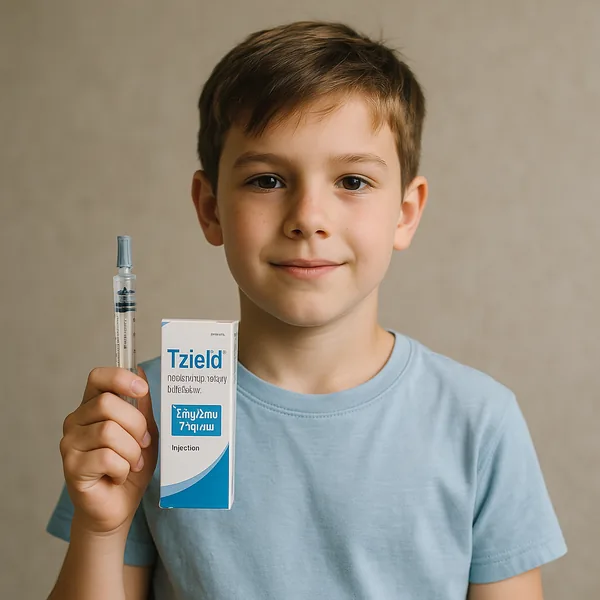
In June 2026 the U.S. Food and Drug Administration (FDA) approved Tzield (teplizumab) for a new indication: children and adolescents aged 8 to 17 who have recently been diagnosed with stage 3 type 1 diabetes. It is the first FDA-approved treatment for this indication, intended to delay the decline of the body's own (endogenous) insulin production, rather than only treating symptoms.
Until now Tzield was approved to delay the onset of stage 3 in adults and children aged 1 year and older with stage 2 type 1 diabetes. The current expansion is the first aimed at children who have already been diagnosed at stage 3. It is important to know that this is an accelerated approval, based on a biomarker, and that the treatment does not cure diabetes and does not replace insulin.
This article explains what is new, what stage 3 type 1 diabetes is, how the drug works, what the approval was based on, and the important caveats. The information is general and is not medical advice.
What Is Type 1 Diabetes and What Is Stage 3
Type 1 diabetes is an autoimmune disease in which the immune system mistakenly attacks the beta cells in the pancreas, the cells that produce insulin. Without insulin the body cannot move sugar into the cells, and the blood sugar level rises.
The disease develops in stages
- Stage 1: autoantibodies are present, but blood sugar is still normal and there are no symptoms.
- Stage 2: blood sugar regulation is disturbed, still without clear symptoms.
- Stage 3: the pancreas produces very little insulin, and symptoms appear such as increased thirst, frequent urination, weight loss and fatigue. At this stage insulin treatment is usually required.
The new indication focuses on stage 3, in the period right after diagnosis, when some beta-cell function still remains and can potentially be preserved.
What the FDA Approved
The expansion allows the use of Tzield in children aged 8 to 17 who have recently been diagnosed with stage 3 type 1 diabetes, to delay the decline in insulin production. The goals of treatment: • Slow the loss of beta cells in the pancreas. • Preserve natural insulin production for longer.
It is important to be clear: the approval was based only on preservation of C-peptide as a biomarker. Measures such as insulin use, time in range and hypoglycemia may continue to be studied, but they should not be presented as a proven benefit of the current approval.
This is the first approval of a disease-modifying therapy for children recently diagnosed at stage 3, meaning a treatment that aims to affect the disease mechanism itself and not only the symptoms. Even so, the treatment is not a substitute for insulin, and patients continue their usual diabetes monitoring and care.
How Tzield Works
Tzield is a monoclonal antibody directed against a protein called CD3 on the surface of T cells of the immune system. Instead of acting directly on blood sugar levels, the drug modulates the autoimmune response that attacks the pancreas.
By modulating the attacking T cells, the drug aims to protect the beta cells that still function and to extend the period during which the pancreas keeps producing insulin. The treatment is given as an intravenous infusion in short courses, under medical supervision.
The PROTECT Trial: Basis for Approval
The accelerated approval was based on the PROTECT trial, a randomized, placebo-controlled phase 3 study. It enrolled 328 children and adolescents aged 8 to 17 who were diagnosed with stage 3 type 1 diabetes within the 6 weeks before entering the trial, all of whom had some remaining beta-cell function.
Participants were randomly assigned to a teplizumab group (217 children) or placebo (111 children) and received two 12-day treatment courses 6 months apart. At 78 weeks, those who received teplizumab better preserved beta-cell function, measured by C-peptide levels, compared with placebo, and the difference was statistically significant.
It is worth noting that secondary endpoints such as glycated hemoglobin and time in the target glucose range showed a trend favoring treatment but without statistical significance.
What the Treatment Does and Does Not Do
To understand the news correctly, it helps to separate what the drug offers from what it is not: • It does not cure type 1 diabetes; it tries to slow the progression of damage to the pancreas. • It does not replace insulin; most patients will keep receiving insulin and managing their sugar. • The approval is accelerated, based on C-peptide as a biomarker reasonably likely to predict benefit, not on long-term outcomes such as diabetes complications. • The indication is limited to children aged 8 to 17 recently diagnosed at stage 3, not to all people with diabetes.
In practice it is an important step toward treatment that changes the course of the disease, but not the end of the story. Whether the treatment is appropriate is decided by a specialist, weighing the benefits against the risks.
Side Effects and Safety
The approved label for Tzield carries a boxed warning about serious and life-threatening cases of viral reactivation, including Epstein-Barr virus (EBV) and cytomegalovirus (CMV). Patients who are immunocompromised are at increased risk, and most serious cases occurred in patients who continued treatment despite persistent, severe lymphopenia. Before starting treatment, patients are evaluated for active EBV and CMV infection, and are monitored for signs of reactivation during treatment and for at least 2 months afterward.
Common reported side effects include vomiting, rash, diarrhea, headache and increased liver enzymes. The drug can also lower white blood cell counts, including lymphopenia, neutropenia and leukopenia, which can raise the risk of infections. An infusion-related reaction and sometimes cytokine release syndrome may also occur, mainly in the first days of a course.
The treatment is given under close medical supervision, with a complete blood count, liver enzyme tests and lymphocyte monitoring. Tell the doctor before treatment about an active infection, planned vaccinations, a weakened immune system, other immune-suppressing treatment, pregnancy, planning a pregnancy or breastfeeding. Completing age-appropriate vaccinations before starting treatment is recommended.
What to Discuss With Your Doctor
The approval described here is by the FDA in the United States. Availability of the drug and the conditions for its use vary by country and depend on local regulatory approval and health-system coverage.
If your child was recently diagnosed with type 1 diabetes and you are interested in this treatment option, it is best to consult a pediatric endocrinologist or the diabetes-clinic team. They can explain whether the treatment is relevant, what its local availability is, and the considerations in the individual case.
When to See a Doctor
Type 1 diabetes requires regular medical follow-up, and some situations call for urgent care. Contact your doctor or diabetes clinic when: • Blood sugar levels are repeatedly high or low without a clear explanation. • New symptoms appear or existing symptoms worsen.
Go urgently to the emergency department or call for help when signs of a diabetic emergency appear: • Nausea, vomiting, deep rapid breathing and a fruity breath odor, which may indicate diabetic ketoacidosis. • Confusion, shaking, cold sweat, loss of consciousness or a seizure, which may indicate severe low blood sugar.
When in doubt, it is better to consult. In an emergency, call your local emergency number.
FAQ
What is new in the Tzield approval?
The FDA approved Tzield (teplizumab) for the first time for children aged 8 to 17 recently diagnosed with stage 3 type 1 diabetes, to delay the decline in insulin production. Previously it was approved to delay the onset of stage 3 in adults and children aged 1 year and older with stage 2 disease.
Does Tzield cure type 1 diabetes?
No. The drug does not cure the disease and does not replace insulin. Its goal is to slow the damage to beta cells and preserve natural insulin production for longer, and most patients continue their usual diabetes care.
How does the drug work?
Tzield is a monoclonal antibody against CD3 on T cells. It modulates the autoimmune attack on the pancreas to protect the beta cells, and it does not act directly on blood sugar levels.
What was the approval based on?
On the PROTECT trial, a phase 3 study in 328 children, in which those who received teplizumab better preserved beta-cell function (by C-peptide) at 78 weeks compared with placebo. This is an accelerated approval based on a biomarker.
Is the drug available everywhere?
The approval is by the FDA in the United States. Availability elsewhere depends on local regulatory approval and coverage. It is best to consult a pediatric endocrinologist about relevance and availability.
Summary
The FDA approval expanding the use of Tzield (teplizumab) is a meaningful step: for the first time a treatment has been approved that tries to change the course of type 1 diabetes in children recently diagnosed at stage 3, rather than only treating symptoms. The treatment aims to modulate the autoimmune attack on the pancreas and preserve natural insulin production for longer.
At the same time, this is an accelerated approval based on a biomarker, and the drug does not cure the disease and does not replace insulin. The decision about whether the treatment fits is made by a specialist, and availability varies by country and local policy.
References
- U.S. Food and Drug Administration. FDA Approves New Indication for Tzield (teplizumab) for Certain Pediatric Patients with Recently Diagnosed Stage 3 Type 1 Diabetes. Source: www.fda.gov
- U.S. Food and Drug Administration. FDA Approves Drug for Pediatric Stage 3 Type 1 Diabetes. Source: www.fda.gov
- Sanofi. Tzield approved in the US as the first disease-modifying therapy for patients recently diagnosed with stage 3 type 1 diabetes. Source: www.sanofi.com
- Ramos EL, et al. Teplizumab and Beta-Cell Function in Newly Diagnosed Type 1 Diabetes (PROTECT). New England Journal of Medicine. Source: www.nejm.org
- Healio. FDA approves Tzield to treat children and adolescents with stage 3 type 1 diabetes. Source: www.healio.com
- Medscape. Teplizumab Approved for Pediatric Stage 3 Type 1 Diabetes. Source: www.medscape.com


Be the first to comment!